Stone at Home
Clear informationhuman supportreal experience
Complementary support and guidance for people facing kidney stones.
Receive clear information, human support and practical guidance to better handle anxiety, questions and symptoms related to kidney stones, always as a complement to essential medical care.
Having kidney stones, going through the pain of severe renal colic or living with questions that are hard to clarify can turn everyday life into constant anxiety and, in some cases, a deeply traumatic experience. But none of this has to be faced alone.

This space was created to support people who genuinely need help in dealing with this condition. It is not intended, under any circumstances, to replace doctors or to provide clinical information reserved for healthcare professionals. The aim is to share personal experiences, practical strategies, habits, routines, mistakes, lessons learned, diet, motivation and understanding, based on real, long-standing and deeply useful lived experience.

Why it is important to understand the condition
An episode can appear suddenly and, within minutes, a person can go from seeming completely normal to experiencing the most intense pain they have ever felt, a pain they are unlikely to forget. The intensity of that pain depends on several factors, as well as on the measures taken at each moment, aspects that this project also seeks to explain from a personal perspective.
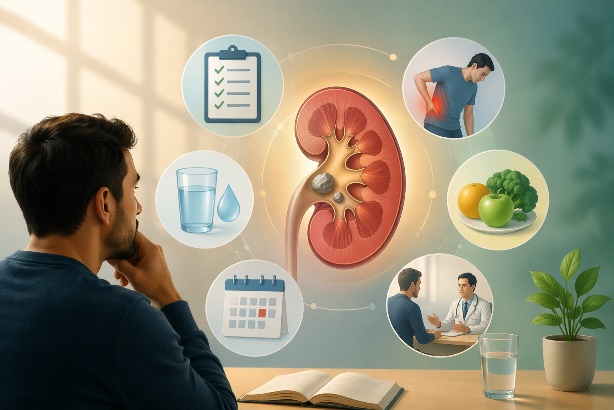
Understanding the condition helps people recognise warning signs, avoid preventable mistakes, manage symptoms better and make more informed decisions throughout the whole process.
Although it may sometimes seem like a temporary problem, renal lithiasis can lead to serious complications when it is not properly monitored. In rare situations, if it is neglected or not treated in time, delayed treatment can compromise kidney function and even put the patient’s life at risk.
Clear informationHuman supportReal experience
Much of the information available online, which many people naturally look for nowadays, is confusing, incomplete, contradictory or not very reliable, whether on generic health websites or through artificial intelligence tools that may sometimes conflict with what you feel or with the medical guidance you have received. And when there is pain, urgency and anxiety, what is most needed is clarity, honesty and, above all, humanity.
Stone at Home was created precisely in response to that reality. It is intended for everyone who needs additional support when facing this condition, whether as the patient or as a family member looking for clearer answers, through complementary information and clear guidance.
The strength of this project comes from first-hand lived experience and from the wish to turn it into useful, responsible and accessible help for those facing the pain, distress, fear and loss of control that this condition can cause.
Here you will find a different, responsible approach centred on understanding the condition. The aim is to help you better understand what may be happening, organise the essential information and feel more prepared to face each stage of the process, both physically and psychologically.

It is important to say this with complete clarity: the support provided by Stone at Home may become one of the most useful forms of help you receive after hospital care, but it is based on sharing knowledge acquired through personal experience with the condition and never replaces professional medical care under any circumstances. On the contrary, it seeks to reinforce that care with a practical, close and human dimension, which makes a real difference in most cases.
Before getting in touch
When you contact me through one of the available options, explain your current situation and the questions you would like to clarify.
Further down, you will also find a simple explanation of the essential aspects of the condition that are important to know, as well as additional information about this project and my personal background.



Using the form:
What kidney stones are

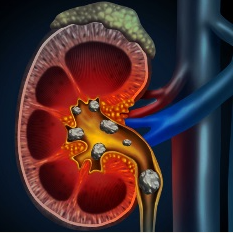
Stones leaving the kidney through the renal pelvis and passing into the ureter, potentially causing the intense pain of renal colic in the lower back area.
Kidney stones, also called renal calculi, urolithiasis, urinary calculi or renal/urinary lithiasis, are solid formations that develop from minerals and other substances present in the urine. They can vary greatly in size and remain silent for long periods. However, when they move or cause obstruction in the urinary tract, they can cause symptoms ranging from mild discomfort to extremely intense pain.
The most common signs include pain, blood in the urine, frequent urge to urinate, nausea, vomiting and general malaise. In some cases, the pain can reach an extreme intensity, causing fainting and a severe physical and emotional collapse.
Treatment depends on the size and location of the stone, as well as each person’s clinical condition. Depending on the situation, it may involve observation, appropriate medication, adjustment of fluid intake or medical procedures aimed at fragmenting or removing the stone.
When suspicious symptoms appear, the first step should always be to seek medical or hospital assessment. When the situation justifies it, that assessment should be urgent. Complementary support only makes sense when there is an appropriate clinical context, especially with later follow-up by a urologist or nephrologist and, within this project, with my personalised support, based on real experience with the condition, knowledge acquired through personal lived experience and responsible sharing of information.
Hydronephrosis and renal colic
When a stone leaves the kidney and moves towards the bladder, it may become stuck in the ureter, partially or completely blocking the passage of urine. This obstruction is what gives rise to what we call renal colic.

Main area of pain in renal colic
The pain usually appears in the lower back area, on the side of the affected kidney, but it may radiate to the abdomen, groin and other parts of the body. Its location and intensity vary according to the position of the stone and the degree of obstruction, as well as other variables that may be preventable.
If urine cannot drain normally, it begins to accumulate above the blockage, which can cause dilation of the ureter and kidney, a phenomenon called hydronephrosis.
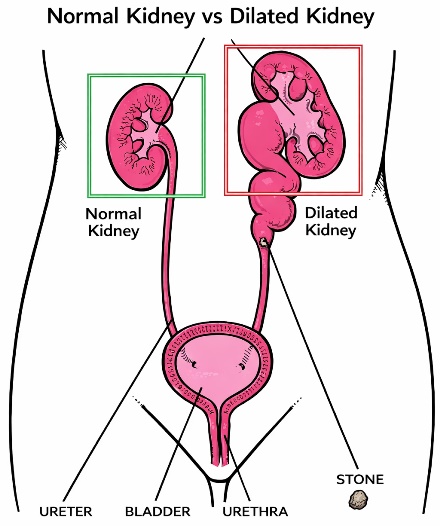
Dilation of a kidney caused by obstruction from a kidney stone in the ureter
There is an essential point that should be highlighted: a reduction in pain does not always mean the clinical situation has improved. In some cases, the pain may temporarily ease even when the obstruction continues or becomes worse. For this reason, symptom progression should never be interpreted in isolation, without appropriate medical assessment.
More about the Stone at Home project
Stone at Home is the English translation of the project’s original Portuguese name, Pedra em Casa, which means exactly “Stone at Home”. The main website URL remains PedraEm.Casa.
Stone at Home is a project fully dedicated to providing additional support to people with renal lithiasis. Through this project, I offer useful information, personalised support and the responsible sharing of knowledge and personal experience.
This help comes from many years of direct contact with this reality and from the conviction that lived experience, when shared with wisdom, honesty and good sense, can make all the difference.
Support can be provided by message, voice call or video call, depending on the situation and availability. Communication can take place in Portuguese, English or Spanish and, when necessary, translation tools may be used to facilitate contact with people from other countries.
No payment is requested before an initial clarification conversation about how the support works. Personalised and more in-depth support, if the person decides to move forward, is paid, as this is the only activity that sustains this project.
How this project and idea began
This idea was born from noticing a common reality: the fact that many people were making the same repeated mistakes, mistakes I also made myself at an early stage.
I realised that people often spoke unclearly about their own condition, left appointments or hospitals with little time to ask doctors the right questions, with unanswered doubts and without the calm needed to understand what they were going through and everything they had heard or had been explained by the doctor.

At the same time, in everyday life, people end up hearing varied information from others who are trying to help but who, in reality, do not bring practical results or real benefits. The same happens online, where there is a great deal of false or scattered information, contradictory accounts and unsafe advice.
All of this can increase anxiety, encourage wrong interpretations and even lead to unwise decisions, such as self-medication, delaying appropriate care or trusting home remedies and other treatments that have not been properly studied or proven. In many cases, these are even fraudulent solutions, including the famous miracle “stone breaker” teas, which do not solve anything, no matter what someone may say.
My intention was to create a clear, personal, responsible and close support space that helps each person in daily life and helps them arrive more informed, calmer and better prepared when speaking with healthcare professionals.
More about me
By a curious twist of fate, I now live a short distance from the Capela do Senhor da Pedra (translated into English: Chapel of the Lord of Stone), in Vila Nova de Gaia - Porto. It is a special place for me and it also ended up inspiring part of the symbolic identity of this project.
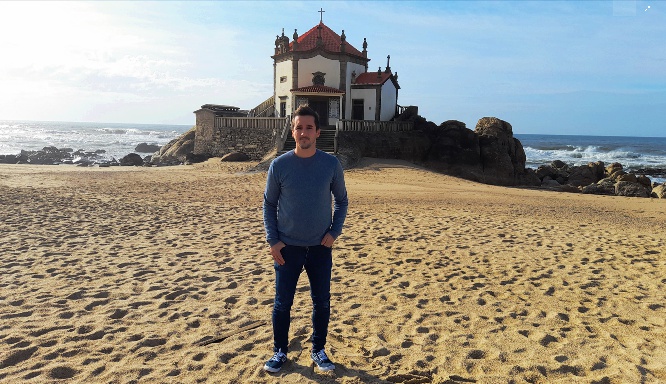
Me at Praia de Miramar (translated into English: Watch the Sea Beach), near the Chapel of the Lord of Stone, in Vila Nova de Gaia – Porto
I have a congenital condition, already identified through specific tests, that increases my predisposition to form kidney stones. Over my lifetime, more than 30 kidney stones have formed in my kidneys, some of which caused significant and traumatic problems. Today, however, I am much better prepared, not only to prevent them from forming but also to overcome new stones that may develop.
My first major episode happened when I was 18, when a stone became stuck in the ureter while descending towards the bladder. It was a deeply frightening experience and a turning point in the way I came to understand this condition.

At 18 years old, only a few days before my first experience with kidney stones, which nothing had predicted because there had been no symptoms at all
Over time, I accumulated practical experience, listened carefully to doctors and deepened my study of this condition. Later, I began to share this learning on social media and, today, I continue to do so with the same sense of responsibility, now in a fully personalised and professional way.
This lived experience allows me to understand closely the fear, pain, urgency, exhaustion and uncertainty that this condition can bring. It also allows me to recognise signs, patterns and questions that are often not explained in simple terms to people going through this for the first time.
I share what I have learned to help other people organise the relevant information, reduce anxiety and be better prepared to talk to their doctor and face whatever may come next.
A more informed patient is often a calmer, more attentive and better prepared patient when making sensible decisions together with healthcare professionals.
Despite everything I have lived through with this condition, it has never stopped me from continuing to live, travel and pursue my life projects. That ability was built with experience, prudence, preparation and appropriate clinical follow-up.

Me travelling, first as two and later as three 😊
But I never forget what matters most: I am here today thanks to medicine and to the professionals who supported me. Out of respect for that work, I repeat with complete clarity that this project exists only to complement medical and professional support, never to replace it.
Get in touch to start the conversation and receive help
If you decide to contact me, the process is simple:
- Choose only one contact method, to avoid delays and allow faster and more organised communication.
- Send a first message, in any language, as long as it is clear and well written, with an objective summary of the problem you are facing.
- Wait for the reply, so that availability and the best way to start the conversation can be arranged.
- If you decide to continue with the support, you will receive the necessary instructions regarding the required advance payment.
- Before the support begins, send all relevant information as clearly and as organised as possible, so that the most useful guidance can be provided from the very beginning and time is not lost in the initial stage.
- From the agreed time onwards, support may take place by real-time messaging and, if necessary, by sharing images or videos, by voice call or by video call, with the consent of both parties.
Choose one of the contact methods and describe your situation.
You may choose a direct message or the form, whichever is simpler for you.
Using the form:
Important additional information
The response time and availability to provide support always depend on the schedule at the moment you get in touch.
This project must not be used in urgent or potentially serious situations that require immediate medical assessment. For example, if you have fever, signs of infection, a very significant decrease in urine flow or a significant worsening of your general condition, you should seek urgent hospital medical care, wherever you are and immediately.
The service fee is the same for everyone, regardless of the country they are in: €45.00, or the equivalent amount in another currency. If you later wish to make an additional donation, you may do so voluntarily. This is more common in cases of requested supplementary support.
This amount includes personal support at that moment, with guidance and clarification of doubts. In general, the conversation may last up to around one hour by message exchange or approximately thirty minutes of continuous conversation.
Support may be provided by message, voice call or video call, but that decision will always be made according to the situation and availability, without being tied to a specific contact format.
Support is provided professionally, with time, attention and responsibility. In some cases, it may take place during business hours in Portugal and, occasionally, outside those hours to accommodate other time zones or some people’s availability.
The conversation does not need to be exhausting or excessively intense. Whenever the situation does not require a more urgent response, it may develop non-consecutively throughout the day or even continue into the following day, respecting both parties’ availability, different time zones and rest periods.
The idea is for you to experience this communication as a serious, useful and human conversation, close enough for you to feel supported, but always with respect for limits, for the context and for the need to seek appropriate medical care.
By getting in touch and proceeding with support, you are considered to have read and understood the applicable conditions, as well as the privacy and data protection policy.
Clarification and legal framework
The services provided through this project are based on the free right of personal choice and decision to share private information and lived personal experiences with third parties, which may be very useful when living with and managing this condition, as a complement to medical support. This sharing of information falls within the commercial activity legally registered in Portugal under the designation: “Other Miscellaneous Personal Service Activities”.
This project does not have, and will never have, under any circumstances, the purpose of replacing medical or hospital support. On the contrary, it actively encourages people to seek professional follow-up with specialist doctors, especially urologists or nephrologists, as well as with general/family medicine and emergency services.
In addition, the project may assist through administrative services aimed at the prior collection of information and the respective processing of data, always with express authorisation. These data may later be made available, in an organised way, to specialist doctors during a consultation, allowing a faster and more effective analysis of the case. This may help ensure that more time and attention are available during the medical appointment.
Purchases of medication without medical supervision are not advised, nor is the purchase of any type of product proposed through our intermediation. This project is not, and does not intend to be, a substitute for professional medical guidance or hospital support.
The whole process strictly follows privacy and data protection rules, which are clearly presented and explicit, and must be accepted when contact is established through the form, or may be reviewed in advance before getting in touch via WhatsApp or Facebook Messenger.
